
Religious Education

The essential place of religious education (RE) in a Church school flows from our deep commitment to the flourishing of every child articulated in the Church of England’s Vision for Education. The Church of England’s Statement of Entitlement (2026) for RE aspires for every child to leave education with a ‘rich and well-informed understanding of Christianity’ and a deep respect for the integrity of other religious beliefs and world views, equipping them for adult life and the diverse interactions they will have.

Through the DBE Vision, we seek to develop loving and supportive relationships with those who lead RE across our schools. We are committed to equipping subject leaders with knowledge and understanding to deliver best and current practice, offering resourcing and training to do this well. We aspire for our schools to be places where RE is at the heart of the curriculum offer, allowing pupils to make sense of the diverse world around them, connecting with the breadth of other subjects studied. Collaboratively working with partners, nationally, regionally and locally, we have bold ambitions for Chester Diocesan schools to creatively and innovatively model excellent practice.
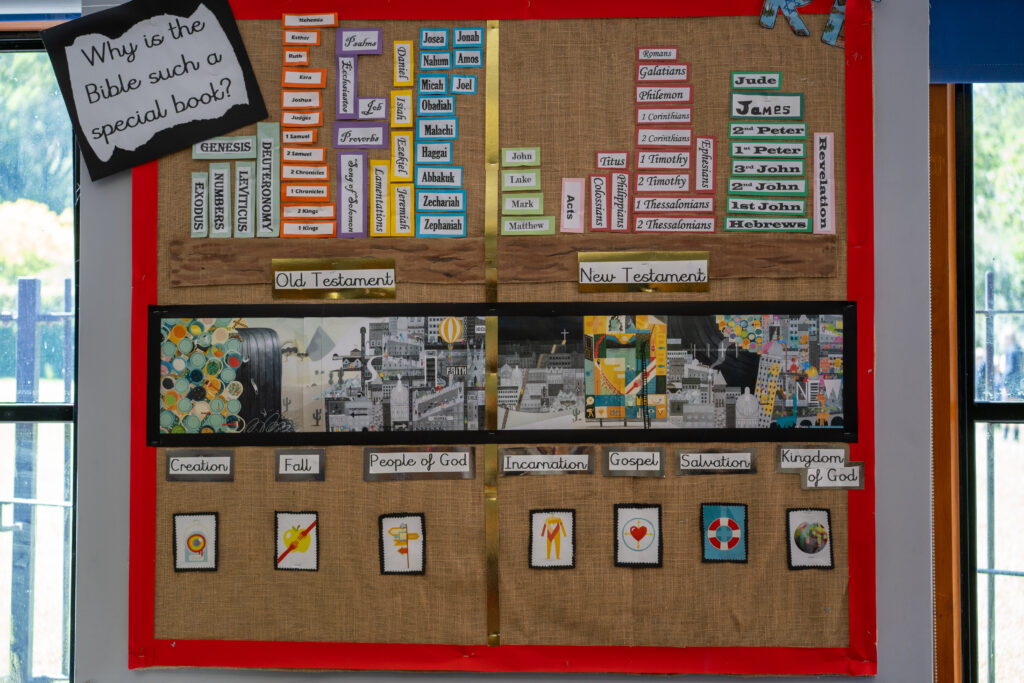
Although sitting outside of the national curriculum, in Church schools, RE should be held with equally high academic value and excellence as any other subject that is taught. It will allow for pupils to;

  • Engage meaningfully and critically with learning which helps them to make sense of the multi-religious and multi-secular world in which they live.
  • Know about and understand Christianity as a diverse global living faith through the exploration of beliefs and practices, using approaches which engage with biblical text and key sources of authority.
  • Gain knowledge and understanding of a range of religious and non-religious worldviews, appreciating the complexity, diversity, continuity and change that exists within those worldviews being studied.
  • Grapple with questions of meaning and purpose raised by human existence and experience.
  • Understand the concept of religion and recognise its continuing influence on Britain’s cultural heritage and in the lives of individuals, communities and societies in different times, cultures and places.
  • Develop disciplinary knowledge which equips pupils to be religiously literate.
  • Explore their personal worldviews; their own religious or non-religious, spiritual and philosophical ways of living, believing and thinking.

(Statement of Entitlement for Church of England Schools 2026)

Voluntary Aided Schools

For Voluntary Aided (VA) church schools, religious education is the responsibility of the governing body of the school. In partnership with Blackburn Diocesan Board of Education, we encourage our VA schools to use the Questful syllabus for teaching denominational religious education in primary schools.

Questful RE promotes the explicit teaching of Christian concepts and God’s big salvation story, giving pupils a deeper understanding of Christianity. Through an open investigative enquiry approach, pupils are given the opportunity to explore major religions and world views. Through a range of disciplinary lenses, pupils have opportunity to ask and explore big questions of meaning. They will discover more about themselves, their relationships with others, the world around them and their understanding of God.

Voluntary Controlled (VC) schools should follow the locally agreed syllabus offered by the local authority’s Standing Advisory Council for RE (SACRE). We recognise that there are valuable resources in Questful RE that can be used to supplement using the locally agreed syllabus.

The requirements for religious education at an academy are specified in the funding agreement for that academy.

Voluntary Controlled Schools

Voluntary Controlled (VC) schools should follow the locally agreed syllabus offered by the local authority’s Standing Advisory Council for RE (SACRE.) Parents may request denominational RE. Please contact the Diocese for guidance on how to go about this. We recognise that there are valuable resources in Questful RE that can be used to supplement using the locally agreed syllabus and would encourage our VC schools to consider this. If you wish support from the Diocese in creating a curriculum with both syllabus, please contact Jen McIlveen.

Academies

The requirements for religious education at an academy are specified in the funding agreement for that academy.

Voluntary Aided schools that convert must provide RE in accordance with the tenets of the faith specified in the religious designation of the school. Questful RE will support academies in delivering RE in accordance with their funding agreement.

Foundation or Voluntary Controlled schools with a religious designation that convert to academy status must arrange for RE in accordance with the requirements for agreed syllabuses (in the main Christian whilst taking account of the other principal religions represented in Great Britain) unless any parents request that their children receive RE in accordance with the tenets of the school’s faith. In practice, these academies generally choose to follow the locally agreed syllabus for their area.

Community Schools

Community schools within the Diocese must use their locally agreed syllabus. However, as with VC schools, may seek to supplement this with other resources.  Contact the Diocese if you would like to find out more.

The Church of England’s Statement of Entitlement 2026 is the guiding document for the standard and quality of religious education that can be expected in all church schools.

The Statutory Inspection of Anglican and Methodist Schools (SIAMS) is the inspecting body that will hold all church schools accountable for the effectiveness of the school’s RE curriculum alongside the priority and profile with which it is held in school.  This is under Inspection Question 6.

For Voluntary Aided schools, and Academies who were former aided schools, SIAMS will also inspect the quality of teaching and learning in RE. This would be under Inspection Question 7.

SIAMS Framework 2026

For Controlled, or former controlled schools, Ofsted is the agent who will inspect and monitor the quality teaching and learning in RE.

Related Resources

Religious Education Council (REC)

Umbrella body representing organisations with an interest in religious education.

RE Today

Supporting religious education in schools with resources and training.

RE Hubs

Find your local RE hub for regional networks and support.

RE Online

National subject association resource hub for religious education.

Culham St Gabriel’s

Charitable foundation supporting excellent religious education.

Upcoming Events